Home
›
Life With ADHD
›
Everyday Life
Life With ADHD · Everyday Life
ADHD & Task Initiation
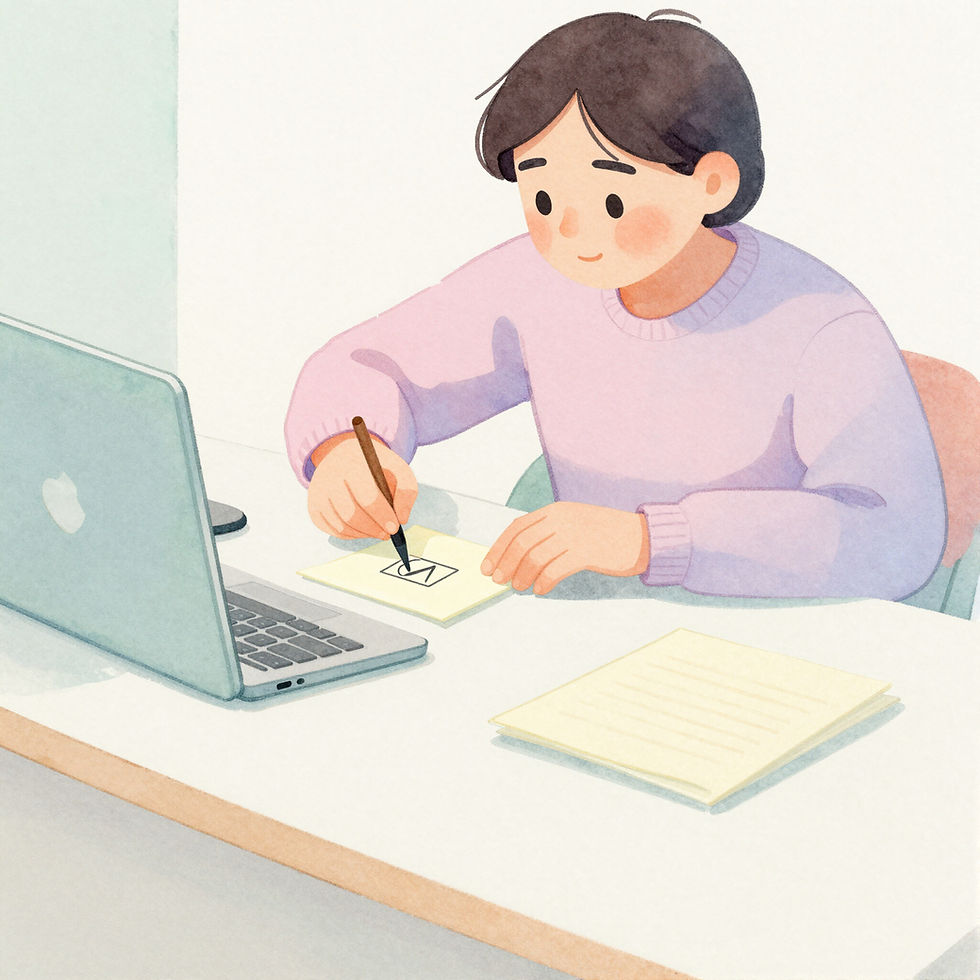
Knowing what you need to do but finding it hard to begin is something many people with ADHD describe. This page gently explores why starting can feel tricky, with practical ideas, a Two-Minute Starting Challenge and a Task Starter Worksheet you can adapt to suit you.
UNDERSTANDING TASK INITIATION
The gap between intending and beginning
Task initiation is the process of getting started. Some people with ADHD describe knowing exactly what they want to do, and even wanting to do it, yet finding it hard to take the first step.
This is not laziness or a lack of caring. Experiences vary from person to person, and the gap may feel bigger on some days than others.
Does any of this feel familiar?
The unopened email
Seeing an important message, planning to reply, and still not opening it days later.
Waiting mode
Having one appointment later in the day and feeling unable to start anything beforehand.
Too big to begin
Looking at a messy room or a large project and not knowing which part to tackle first.
Easy, yet stuck
Putting off a quick, simple task, such as booking a call, even though it would only take a few minutes.
If none of these examples match your experience, that is completely okay. Notice what feels true for you, without judgement.
ACTIVATION STRATEGIES
Gentle ways to help get started
Different strategies suit different people and different days. Try one idea at a time and keep what feels helpful to you.
🌸 Tiny first steps
Make the first step so small it feels almost too easy, such as opening the document or putting on your shoes.
💜 Prepare the environment
Set out what you need in advance and reduce distractions where you can, so starting takes less effort.
⏱️ Short timers
Try working for just five or ten minutes. You are welcome to stop when the timer ends, or carry on if it feels right.
🤝 Body doubling
Some people find it easier to begin when someone else is nearby, in person or online, working quietly alongside them.
🧭 Reduce uncertainty
If you are unsure where to begin, write down the very next action or ask a question to clarify what is needed.
⭐ Rewards
Pair a task with something you enjoy, like music or a favourite drink, or plan a small treat for afterwards.
🔋 Check your capacity
Notice whether you are tired, hungry or overwhelmed. Sometimes a rest or snack comes first, and that is okay.
REFLECTION ACTIVITY
The Two-Minute Starting Challenge
Pick one small task and give it just two minutes. There’s no pressure to finish – the aim is simply to begin and notice what helps you. Everyone’s experience is different, so be kind to yourself whatever happens.
Try it now
- Choose one task you’ve been putting off.
- Find the very first, tiniest step.
- Set a timer for two minutes and start.
- When the timer ends, you can stop or keep going – both are fine.
Reflection prompts
- How did it feel just before you started?
- What made starting easier or harder today?
- Did you keep going after two minutes?
- What might you try differently next time?
NEXT STEPS
Toolkit & next steps
Take what feels useful and leave the rest. Everyone's experience of ADHD is different, so go at whatever pace suits you.
Worksheet · coming soon
Task Starter Worksheet
A printable worksheet to help you choose a task, break it into a tiny first step and notice what helps you begin. This space is reserved for a downloadable version.
Related pages
More from Life With ADHD > Everyday Life:
The ADHD & Me Toolkit
Explore gentle tools, checklists and worksheets you can adapt to your own needs.
ADHD & Me provides general educational information and lived experiences. It does not replace professional medical advice, diagnosis or treatment. Please seek advice from an appropriately qualified professional about your individual circumstances.
ADHD & Me provides general educational information and lived experiences. It does not replace professional medical advice, diagnosis or treatment. Please seek advice from an appropriately qualified professional about your individual circumstances.